
Foundation Areas Built for Stability
House Pad Grading in Lexington for level building surfaces that support structural requirements
Uneven terrain prevents proper foundation installation and creates drainage problems that persist throughout the life of a structure. Spartan Land Solutions grades house pads by shaping building sites to specified elevations, establishing drainage slopes away from foundation zones, and compacting fill material to design density. The grading process transforms sloped or irregular ground into a construction-ready platform that meets engineering specifications and supports long-term site performance across Lexington and Central Kentucky properties.
Grading begins after clearing removes vegetation and obstacles from the pad area. Equipment operators cut high zones and fill low areas to create consistent elevation across the building footprint, then establish slopes that direct runoff away from the foundation perimeter. Soil moisture content affects compaction quality, and clay-rich Central Kentucky soils require monitoring to avoid grading during saturated conditions when proper compaction cannot be achieved.
Arrange an on-site consultation to review your building plans and determine grading requirements for your specific lot conditions.
House pad grading controls how water moves across and away from your building site. Without adequate slope, water pools near foundation walls and saturates backfill zones, increasing hydrostatic pressure against basement walls and creating conditions for settling and cracking. Grading establishes minimum slopes of two percent away from the foundation for at least ten feet, directing runoff toward natural drainage paths or engineered collection systems.
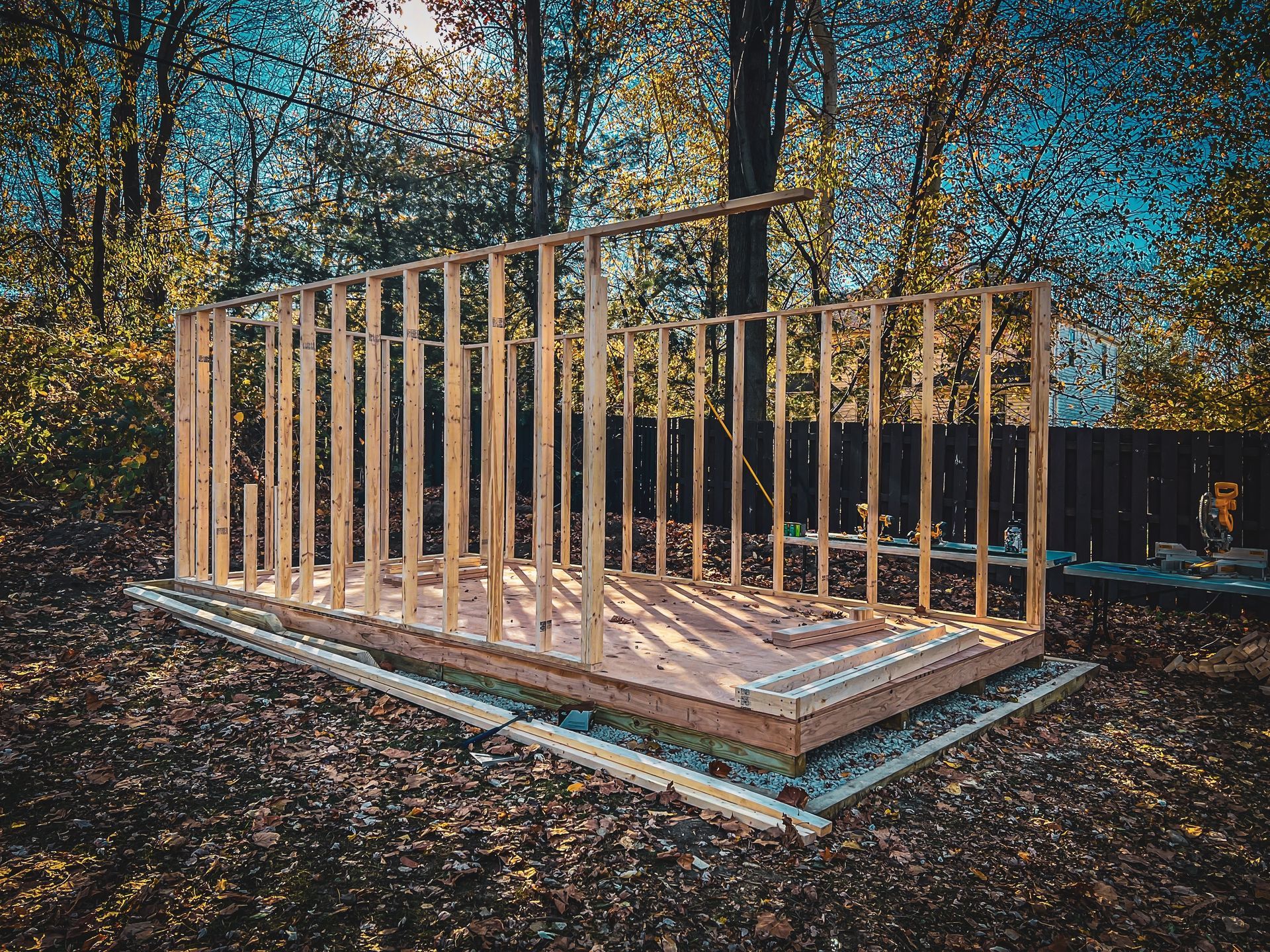
Once grading is finished, the building pad displays consistent elevation with no depressions where water can collect. Survey stakes confirm that the pad sits at the planned height relative to surrounding grades and adjacent features like driveways or septic fields. The surface is firm enough for heavy equipment traffic without rutting, indicating that compaction has reached the density needed to prevent settling under the weight of the structure and interior fill.
Grading work coordinates with other site preparation phases including clearing, utility trenching, and driveway installation. Some projects benefit from rough grading that establishes general pad shape early in the process, followed by fine grading immediately before foundation work begins. Other sites require finished grading in a single phase when construction timelines are compressed or when weather windows limit the number of times equipment can access the property.
Answers to Frequent Grading Questions
Property owners and builders preparing for construction often want to understand how site conditions affect grading work and what the process involves.
What determines the final pad elevation?
Building codes, drainage requirements, and the position of adjacent features like roads and septic systems establish minimum elevations, and your design may specify additional height to improve views or account for flood zone regulations.
How does soil type affect grading in Lexington?
The region's clay soils hold moisture longer than sandy soils, which means grading schedules depend on recent rainfall and seasonal conditions to avoid working saturated ground that cannot be compacted properly.
When is fill material needed versus cutting existing grade?
Sites with significant slope require cutting into hillsides to create level zones, while relatively flat lots may need imported fill to raise the pad above surrounding grades for drainage purposes.
How is compaction verified after grading?
Operators make multiple passes with vibratory equipment across fill zones, and wet spots or soft areas receive additional compaction or soil replacement until the surface remains firm under equipment weight.
What's included in house pad grading versus lot grading?
House pad grading focuses on the immediate building area and foundation perimeter, while lot grading extends across driveways, yard areas, and drainage swales throughout the entire property.
Spartan Land Solutions provides grading services for residential builds, agricultural structures, and accessory buildings across Central Kentucky. Contact us to discuss your site conditions and receive a detailed estimate based on your project specifications.