
Clear Land Without Destroying the Soil
Forestry Mulching in Lexington for overgrown properties, hunting land, and farm improvements that need brush and saplings removed
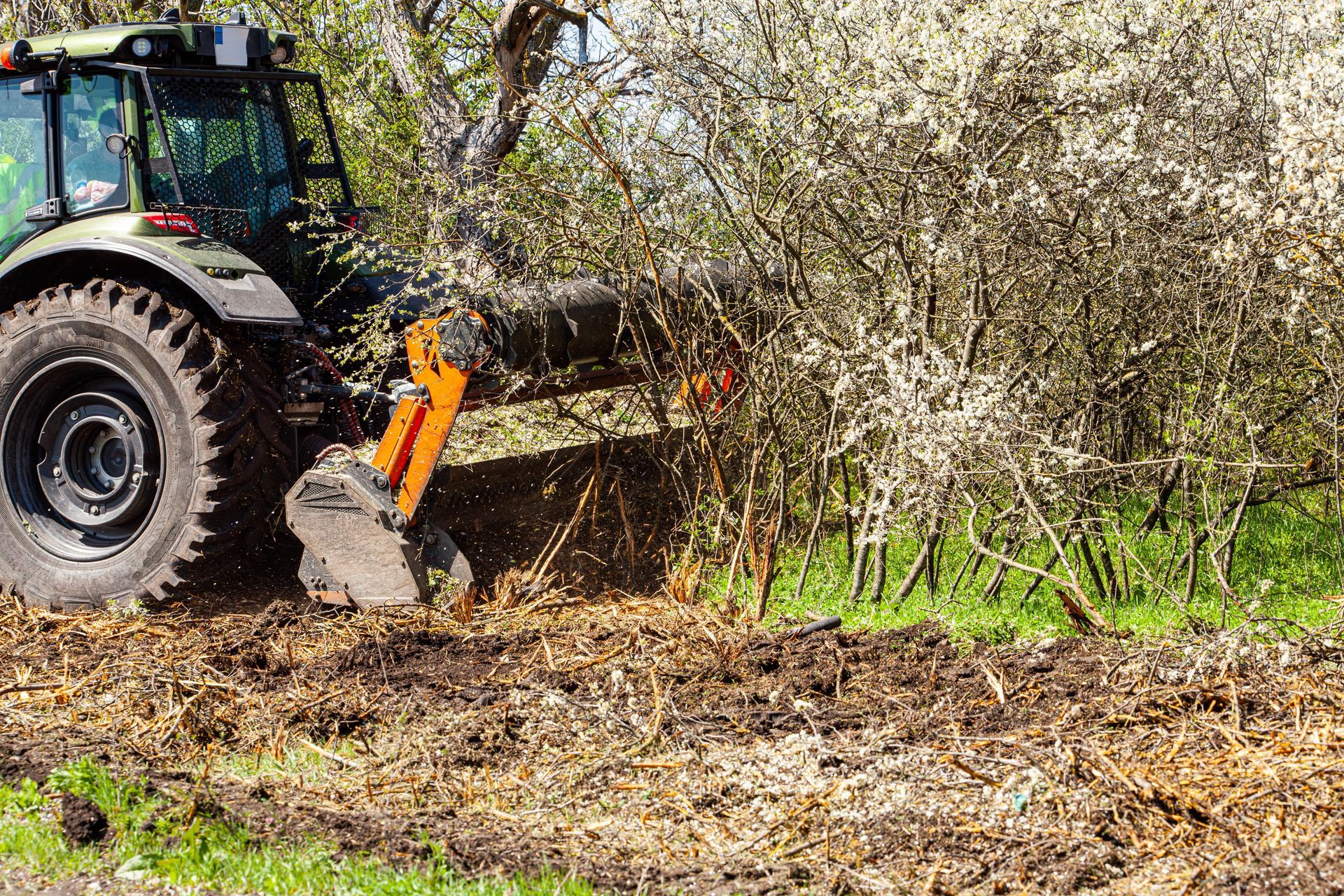
Spartan Land Solutions specializes in forestry mulching across Lexington and Central Kentucky, using a single-pass process that clears brush, saplings, invasive vegetation, and undergrowth while leaving a protective layer of mulch behind. This method handles overgrown properties, hunting land, farm improvements, and residential acreage where traditional clearing would disturb too much soil or require multiple pieces of equipment. You see immediate improvement in accessibility and visibility once the work is finished, with the added benefit of organic material that suppresses regrowth and helps retain moisture.
The mulching head grinds vegetation into chips and distributes them evenly across the cleared area, eliminating the need for piling, hauling, or burning debris. Projects that would take weeks with conventional methods are often completed in days, and the ground remains stable enough for equipment or foot traffic shortly after clearing. Properties with moderate slopes or uneven terrain benefit particularly from this approach, since the mulch layer protects against erosion during the next rain event.
Request a forestry mulching estimate to review your property conditions and discuss timeline expectations.
The machine cuts through material up to several inches in diameter and processes it on-site, which means no burning permits, no debris removal, and no exposed topsoil that would wash away during Kentucky's heavy spring rains. Operators adjust speed and cutting depth based on vegetation density and terrain, making multiple passes in heavily overgrown sections to ensure thorough coverage. The mulch layer settles to a uniform depth that allows you to walk the property immediately and plan next steps without waiting for debris removal or site cleanup.
Once clearing is finished, you notice defined property lines, open sightlines for hunting or recreation, and clear access routes where vehicle traffic was previously impossible. The mulched surface prevents most invasive species from re-establishing during the first growing season, and native grasses or desired plantings establish more easily in the decomposing organic layer. Properties prepared this way transition smoothly into maintenance schedules, future development phases, or agricultural use without additional grading or soil amendment in most cases.
Forestry mulching does not remove stumps or roots from mature trees, and it works best on vegetation under six inches in diameter. Larger trees require different equipment or removal methods, and final grading or pad preparation involves separate steps if construction is planned. Some properties combine mulching with selective tree removal to preserve specific hardwoods or create shaded areas within cleared zones.
What Property Owners Usually Ask
Forestry mulching generates questions about timing, outcomes, and what the process involves. Understanding how the equipment handles different vegetation types and what the property looks like afterward helps you decide if this approach fits your project goals.
What size vegetation can forestry mulching handle?
The mulching head processes brush, saplings, and small trees typically up to six inches in diameter, along with vines, undergrowth, and dense thickets that would be difficult to clear by hand or with standard bush hogs.
How does mulching compare to traditional land clearing methods?
Traditional clearing often requires cutting, piling, and hauling debris off-site or burning, which exposes bare soil and creates erosion risk, while mulching leaves a protective layer that stabilizes the ground and reduces the need for multiple equipment passes.
When is the best time to schedule forestry mulching in Lexington?
Fall through early spring works well because the ground is firmer and visibility is better without summer foliage, though projects can proceed year-round depending on soil conditions and access.
What does the property look like after mulching is finished?
You see an even layer of wood chips covering the cleared area, with stumps from larger trees flush or slightly above ground level, and all brush and undergrowth removed so the property is immediately walkable and accessible.
Can forestry mulching prepare land for future construction?
Mulching clears vegetation and improves access, which are necessary first steps, but construction projects typically require additional grading, pad preparation, and possibly stump removal depending on building placement and foundation type.
Spartan Land Solutions handles forestry mulching projects throughout Central Kentucky, from small residential lots to larger farm tracts that need access improvement or hunting land preparation. Schedule a property consultation to walk the site and discuss clearing objectives specific to your acreage.