
Build Sites That Start With Solid Preparation
House Pad Clearing in Lexington for properties transitioning to new construction phases
Spartan Land Solutions prepares house pad sites by removing brush, vegetation, and obstacles from planned building locations across Lexington and Central Kentucky. Construction efficiency depends on the condition of the site before equipment arrives and foundation work begins. A properly cleared pad allows builders to stage materials, move equipment freely, and work without disruptions caused by buried stumps, surface vegetation, or uncleared zones adjacent to the building footprint.
The clearing process involves removing all standing vegetation, cutting flush stumps within the building envelope, extracting root masses that interfere with foundation excavation, and establishing defined boundaries around the pad area. Your building layout determines clearing limits, and property features like access routes, septic field locations, and utility corridors affect how the work progresses across the site.
Schedule a site evaluation to review your building plans and determine clearing requirements before construction begins.
House pad clearing removes both visible vegetation and subsurface obstacles that would delay excavation work. Root systems from cleared trees are extracted within the pad zone to prevent voids in fill material, and surface organic matter is removed so that grading equipment contacts mineral soil rather than decomposing vegetation layers. These steps reduce settling risks and prepare the site for stable compaction during grading operations.
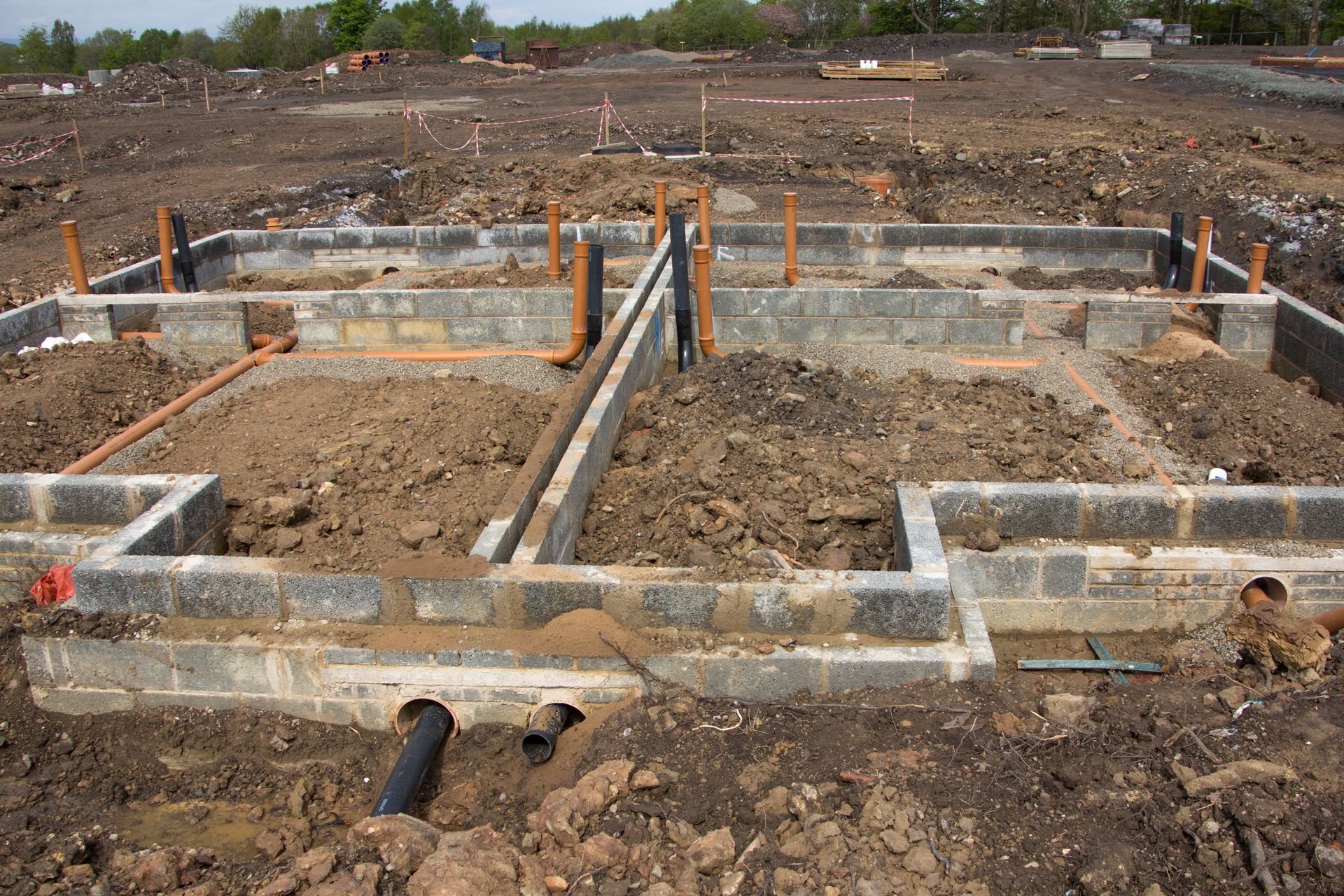
After clearing is complete, you'll notice a defined building zone with clear sightlines across the construction area. Equipment operators can see grade stakes and layout markers without obstruction, and material deliveries can be placed precisely where framers and foundation crews need them. The site remains accessible even after rain because cleared mineral soil drains faster than vegetated ground covered in leaf litter and organic debris.
House pad clearing coordinates with lot clearing when additional areas need preparation for driveways, septic systems, or utility trenches. Some projects require only the immediate building footprint cleared initially, while others benefit from clearing wider zones that accommodate construction staging and future landscaping work. The sequence depends on your builder's timeline and whether grading will follow immediately or occur in a separate phase.
Questions Property Owners Ask Before Clearing
Builders and landowners preparing for construction often ask about timing, site conditions, and how clearing integrates with other site work.
What should be cleared before the builder arrives?
The building footprint plus a perimeter buffer of at least ten feet allows equipment to maneuver around the foundation and gives workers safe access to all sides of the structure during framing and exterior work.
How does Kentucky clay affect clearing work?
Central Kentucky sites with heavy clay require careful management of topsoil layers during clearing since clay subsoil compacts differently than organic topsoil and affects drainage patterns once vegetation is removed.
When should house pad clearing happen relative to grading?
Clearing removes vegetation and obstacles first, then grading equipment shapes the pad to design elevations and establishes drainage slopes without interference from stumps or root masses.
What happens to the cleared material?
Brush and small vegetation are typically mulched on-site or removed depending on the volume and your plans for the surrounding property, while larger wood may be stacked for firewood or hauled off-site.
How is the building location marked before clearing begins?
Your surveyor or builder provides corner stakes or layout marks that define the building envelope, and clearing crews work outward from those boundaries to maintain accurate placement of the pad within the overall lot.
Spartan Land Solutions coordinates clearing schedules with your construction timeline to prepare building sites when they're needed. Request an estimate based on your site plans and building location to begin the preparation process.